


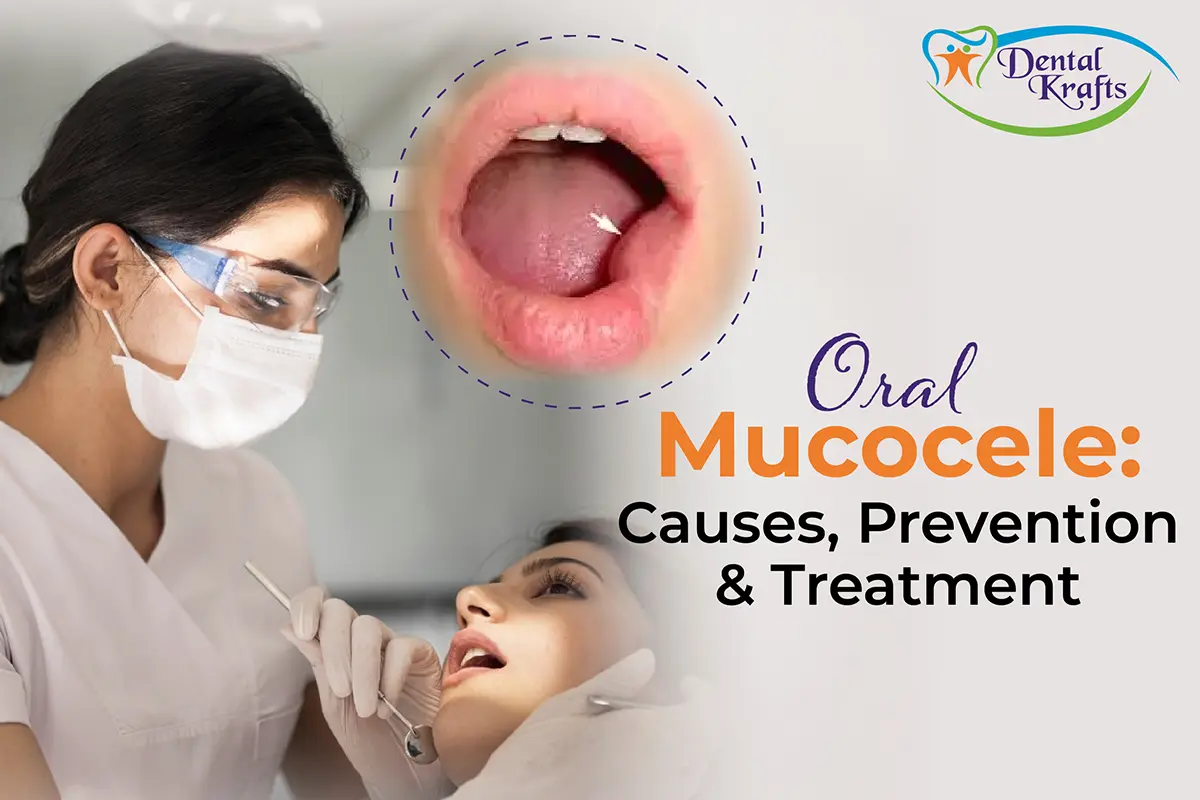
Ever noticed a small, soft bump appear inside your lip out of nowhere? You poke at it, wonder what it is, and hope it goes away on its own. More often than not, that's an oral mucocele - and it's more common than most people think.
It's not dangerous, doesn't spread, and has nothing to do with cancer. But it can get uncomfortable, especially when you're eating or talking, and ignoring it isn't always the right call.
It's a mucous cyst that forms when a salivary gland duct gets blocked. Saliva can't flow out the way it normally should, so it gets collected under the soft tissue inside your mouth and creates a small bump.
It's look like:
People generally mistake it for a pimple or a minor infection. It's neither. It's just trapped saliva sitting beneath the skin - harmless in nature but annoying in practice.
Almost every case traces back to some kind of small injury inside the mouth. When soft tissue gets repeatedly irritated or damaged, the salivary duct takes the hit and stops draining properly.
Common Reasons:
Once you disrupt your duct, saliva spreads into the surrounding tissue instead of draining normally. That's what slowly builds into the bump you end up noticing. And if the habit causing the irritation continues, the swelling tends to come back even after it clears up.
The signs are pretty straightforward and usually noticeable on their own.
It doesn't cause fever. It doesn't spread like an infection. And the way it grows is slow and predictable — very different from something more serious. That said, if it keeps returning or starts growing noticeably, that's worth paying attention to.
Treatment really depends on how long it's been there and whether it keeps coming back.
At Dental Krafts, the first step is always a proper check to confirm what you're actually dealing with. If treatment is needed, it's straightforward and done under local anaesthesia. The procedure itself is short — recovery is the part that needs your attention, mostly by breaking the habit that caused it in the first place.
Most cases are preventable. The habits that damage soft mouth tissue are usually the same ones people do without thinking.
None of these are difficult changes. But they make a real difference in keeping your salivary glands working the way they should.
Some mucoceles clear up in a couple of weeks without any help. Others don't. Here's when you shouldn't wait:
Getting it checked early means you know exactly what you're dealing with — and if it does need treatment, catching it sooner makes the whole process simpler.
At Dental Krafts, patients dealing with recurring or uncomfortable mucoceles get a proper assessment before any treatment is decided. Including the size, location, and history of the swelling to decide the treatment approach. The goal is always to treat the source problem, not just the bump.
Avoid lip and cheek biting, fix sharp tooth edges, and maintain regular oral hygiene. Most cases come down to repeated minor injury, so breaking those habits goes a long way.
If you have either damaged your salivary duct, accidentally by biting in the same spot.
Small ones may clear on their own. Persistent or recurring cases are treated with laser removal or minor surgery under local anaesthesia.
Don't touch or bite the same area constantly and consult a dentist if it hasn't resolved within two weeks. Not trying to pop it by yourself, usually makes things worse.

