


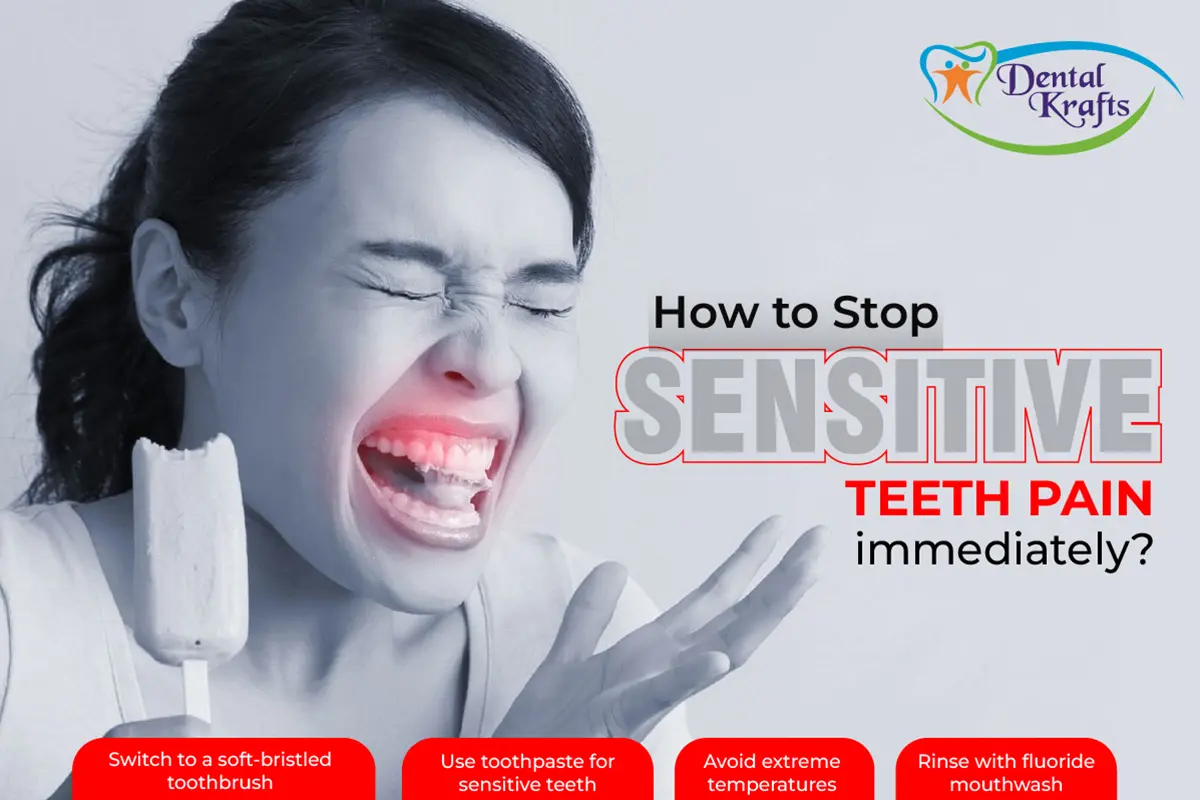
Dealing with sensitive teeth can be frustrating and painful. If you’ve ever taken a sip of cold water and felt a sharp sting, or enjoyed a hot drink only to wince in pain, you know how sudden tooth sensitivity can disrupt your day. At Dental Kraft, many patients ask, why do my teeth hurt and why are my teeth sensitive all of a sudden. Understanding the causes and knowing what to do immediately can make a big difference.
Tooth sensitivity, also called dentin hypersensitivity, happens when the protective layers of your teeth—enamel or gums—wear away, exposing the dentin beneath. Dentin contains tiny channels that connect directly to the nerves inside your teeth. When these nerves are exposed, even mild stimuli can cause sharp, uncomfortable pain.
Common triggers include:
Recent dental treatments, such as whitening or fillings, can sometimes cause temporary sensitivity.
People often ask, why does my tooth hurt or why do all my teeth hurt suddenly. Sudden pain could be a sign of cavities, a broken tooth, or exposed roots. It’s important not to ignore persistent tooth sensitivity, as it may indicate a larger dental issue.
If your teeth are suddenly sensitive, here’s how to reduce discomfort immediately:
These steps can provide immediate relief and help manage discomfort until you can see a dentist.
While home remedies help short-term, professional care can provide lasting results. At Dental Kraft, treatments include:
Regular dental check-ups help identify problems early, such as cavities or gum disease, preventing worsening tooth sensitivity.
To prevent sensitive teeth from returning, follow these tips:
Small changes in daily habits can protect your teeth and reduce episodes where my teeth hurt suddenly.
Exposure of dentin, enamel erosion, gum recession, cavities, or cracks can cause tooth sensitivity.
Sudden sensitivity may result from exposed roots, cavities, or worn enamel.
Use sensitive toothpaste, avoid extreme temperatures, rinse with fluoride, and apply a cold compress.
Yes. Acidic foods, cold drinks, and sugary items can worsen tooth sensitivity.
If pain persists, is severe, or comes with swelling, visit a dentist immediately.

